Opinion: The Day the American Security Guarantee Died - Gulf States Rethink Their Future as Iran War Exposes Strategic Vulnerabilities
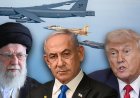
Sixteen days into the US-Israeli war on Iran, Gulf Arab states are confronting a harsh strategic reality: the American security umbrella they've relied on for decades has failed to protect them. As Iranian missiles and drones strike UAE ports, Bahraini oil facilities, and Kuwaiti infrastructure, regional leaders and analysts are asking whether the US-Gulf partnership has become a liability rather than an asset. This analysis examines the crumbling trust in Washington's guarantees, the search for alternative security arrangements, and the emerging contours of a post-American Gulf order. Drawing on academic frameworks of "residual hegemony" and interviews with regional experts, the piece argues that the Gulf is witnessing not just a temporary crisis of confidence, but a fundamental restructuring of its security architecture .
 Sercan Roni
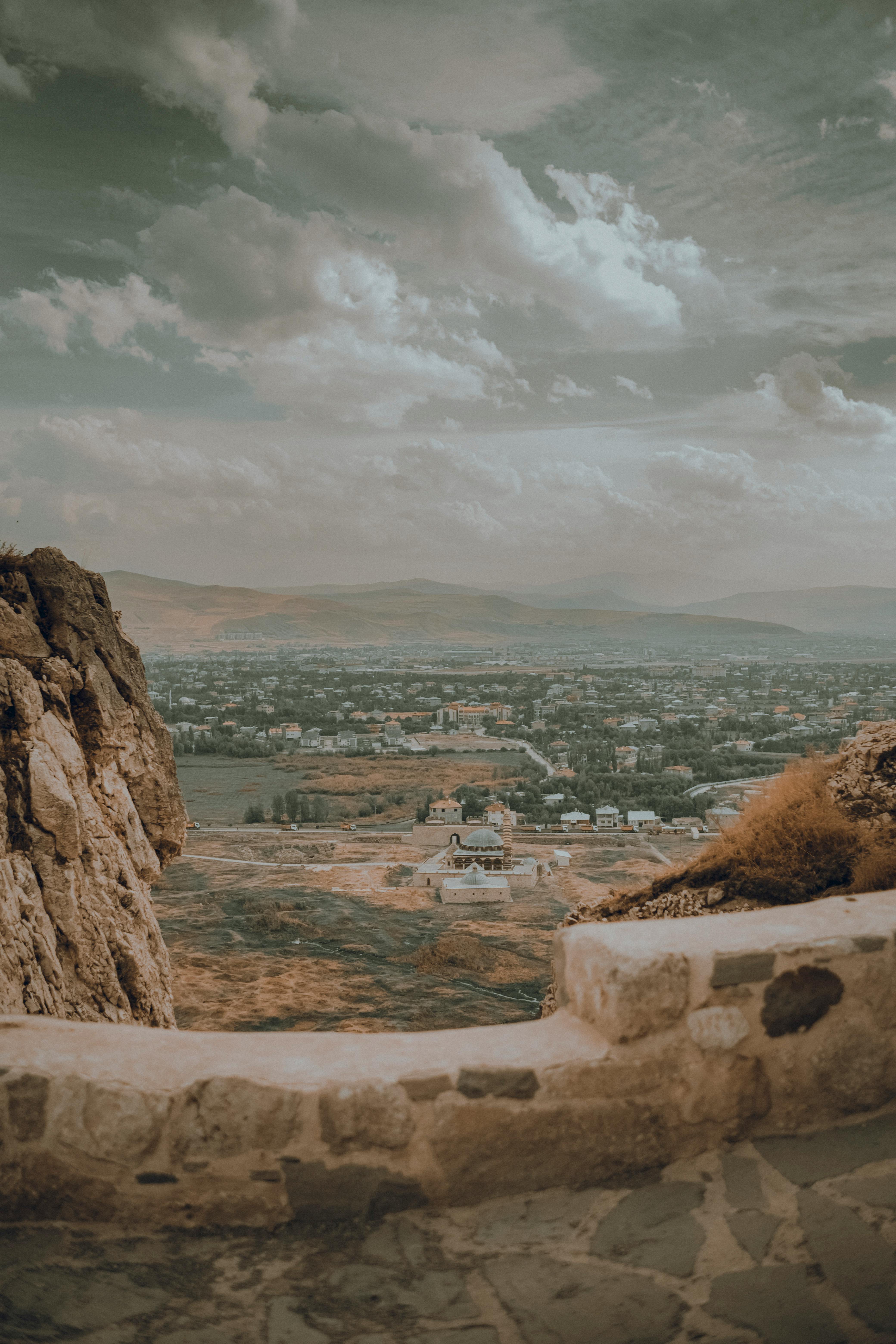
An eerie quiet hangs over Ras al-Khaimah's industrial port. Usually it is a thriving maritime hub in the United Arab Emirates, but now ships stand docked and silent. Not far out along the hazy horizon, a backlog of hundreds of tankers have lined up in recent days, halted along a waterway flooded with danger .
Any vessel heading past Ras Al Khaimah out to the Arabian Sea must traverse the world's most treacherous strip of water for shipping today: the Strait of Hormuz. Just over 20 nautical miles from Ras al-Khaimah, two oil tankers heading for the strait were attacked by Iranian missiles last week, with one catching fire. On Saturday, Fujairah—the UAE's main oil port on its east coast—was targeted by a drone attack, with thick black smoke billowing from its terminal .
This is the new reality facing Gulf states as they are pulled deeper into a war they did not start and had tried diplomatically to prevent.
The Failed Guarantee
For decades, Bahrain, Kuwait, Saudi Arabia, the UAE, Qatar, and Oman have allowed US military bases, infrastructure, or access on their soil, and have been among the largest buyers of American weapons and technology. In return, the US was the Gulf's closest and most significant military partner and protector .
But the ongoing US-Israeli war on Iran—now in its sixteenth day—has exposed the deep fragilities of this security system. People across the region are asking tough questions about the ineffectiveness of the regional security apparatus and the security guarantees of America that it has been promising the region for over decades .
"The perceived Iran threat to the Gulf only became a reality when the US declared the war—Iran did not fire first," says Khaled Almezaini, an associate professor of politics and international relations at Zayed University in Abu Dhabi. "There is strong condemnation of the Iranians but at the same time there's a message to the Americans and the Israelis that, well, we have to find a way to end this. This is not our war" .
'Residual Hegemony' and Its Limits
The current crisis reveals a paradox that scholars have been studying for years: while the US maintains significant latent influence in the Gulf, its manifest presence is eroding. Academic research on Gulf security architecture distinguishes between "manifest indicators of change" (military deployments, diplomatic realignments, formal agreements) and "latent mechanisms of persistent influence" (technological dependencies, infrastructural networks, knowledge regimes) .
However, the war has shown that latent influence is no substitute for active protection. The US may still benefit from what researchers call "digital lock-in"—software-dependent weapons systems that create "weaponized interdependence"—and persistent physical infrastructure networks that provide operational access . But for Gulf leaders watching Iranian drones strike their ports and oil facilities, these abstractions offer little comfort.
"The problem the US will need to recover from is the loss of credibility as it opened a Pandora's box without thinking through what would happen next," Peter Frankopan, a professor of global history at Oxford University, told Middle East Eye. "Lack of competence is a terrible thing to display in public" .
The Diversification Imperative
Long before the current conflict, Gulf states had begun hedging their bets. A series of US policy decisions over the past two decades—the withdrawal from Iraq in 2011, the Obama administration's "Pivot to Asia," the muted response to the 2019 Iranian attacks on Saudi oil facilities, and the abrupt withdrawal from Afghanistan in 2021—had already eroded trust in American commitments .
The response was a multi-pronged strategy of adaptation. GCC states began diversifying security partnerships, forging alignments with emerging regional and international actors such as Türkiye, China, and Russia, while simultaneously seeking to avoid entanglement in the Iran-Israel rivalry .
Saudi Arabia signed a mutual defense agreement with Pakistan and explored joint weapons production with Turkey. The UAE hosted Chinese military personnel and deepened its technological cooperation with Beijing. Qatar strengthened its ties with both Ankara and Tehran. These moves reflected a growing desire for strategic autonomy—the ability to navigate the shifting power dynamics of an increasingly multipolar world .
The current war has dramatically accelerated this trend.
"When the dust settles from this war, the diversification that was taking place will speed up," Fawaz Gerges, a professor of international relations at the London School of Economics, told Middle East Eye .
A 'Suez Moment' for American Power?
Some analysts are drawing parallels to the 1956 Suez Crisis, when Britain and France's ill-fated attempt to seize the Suez Canal exposed the limits of European power and marked the end of their imperial era in the Middle East .
"I think we are witnessing a Suez Crisis moment for the US," Gerges said .
The parallels are instructive but not exact. Few predict that a battered Iran will emerge victorious from the war, offering an alternative security system to the US. China and Russia, while supporting Tehran, are confined to playing the role of spoilers rather than replacements .
However, the crisis of confidence in US power is not confined to the Gulf. The US has reportedly begun moving a Terminal High-Altitude Area Defence (Thaad) missile system from South Korea to the Middle East, raising questions in East Asia about American commitments. European allies, already strained by the war in Ukraine, now face the consequences of Hormuz's closure without meaningful consultation or support from Washington .
"The very fact that there is a debate over whether ties with the US are an asset or liability is disturbing," said Ian Lesser of the German Marshall Fund .
The Emerging Post-American Order
As the war enters its third week, Gulf leaders are grappling with fundamental questions about their region's future. Two stark options have emerged :
Option One: Continue depending on the US or another external power for security. But if even the mightiest military, with 13 major bases in the region, could not protect Gulf states against only one opposing nation—Iran—then the chances of success through this model are increasingly suspect.
Option Two: Review and reform the regional security architecture itself. This would require a more inclusive framework that brings Iran and Iraq into the conversation, moving beyond the "fear and exclusion" model on which the GCC was founded in 1981 .
The March 2023 Saudi-Iranian peace deal, brokered by China, suggested this path was possible. Around the same time, a wave of reconciliation swept the region: Egypt reached out to Turkey and Syria, Qatar and Bahrain restored diplomatic relations, and Syria was readmitted to the Arab League .
The current war has tested these nascent openings, but it has also clarified their importance. If the countries in the region had refused to permit the US and Israel to use their land and airspace to strike Iran, might Tehran have refrained from attacking targets in the Gulf?
What Comes Next
"Across the Gulf, I am hearing lots of threats to turn to China and elsewhere for weapons systems, security and defense and even for investment more broadly," Frankopan said. But he cautioned that such shifts take time. "The US is an enormous economy, with lots of highly innovative and exciting opportunities. That does not change overnight" .
Gerges put it more starkly: "In football terms, this looks like an own goal" .
For Gulf states, the lesson of the past sixteen days is painful but clear: over-reliance on a single external power creates vulnerability, not security. The coming months will likely see accelerated outreach to Asian powers, European partners, and possibly even track-two dialogues with Tehran.
The Gulf's security mosaic is being fundamentally redrawn. The question is no longer whether the old order will survive, but what will replace it—and at what cost.
The views expressed in this opinion piece are solely those of the author and do not necessarily reflect the position of this publication.