Iran’s Political Order in Flux as Khamenei’s Death Leaves Leadership Vacuum and Succession Crisis
The killing of Supreme Leader Ali Khamenei has left Iran’s political system without a recognized successor, deepening internal fractures as the country fights a multi-front war.
 Sercan Roni
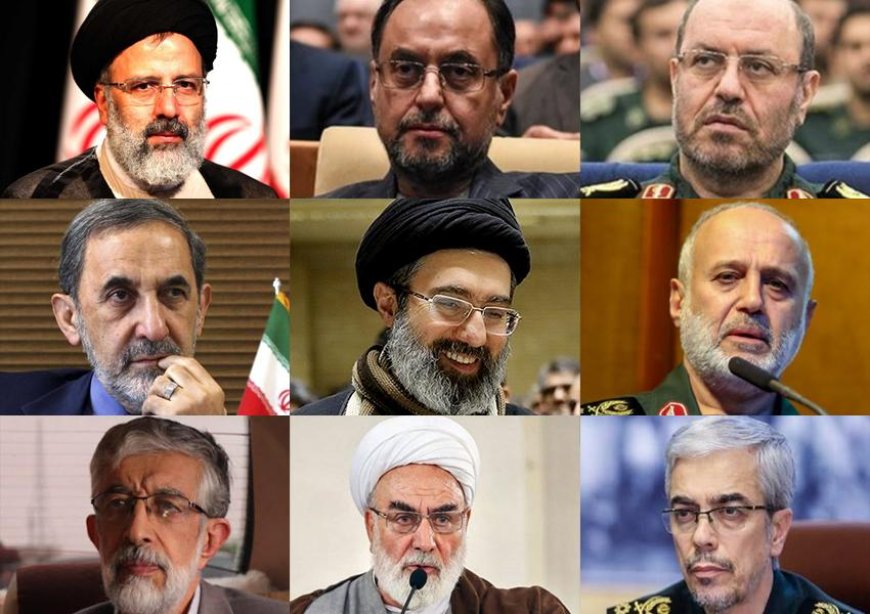
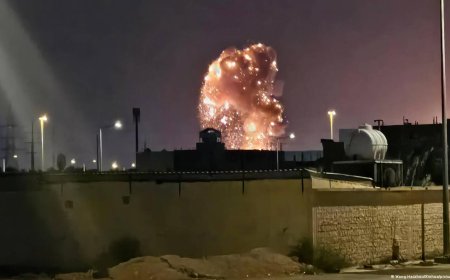
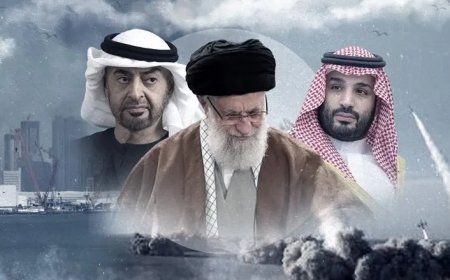
The killing of Iranian Supreme Leader Ali Khamenei in the opening hours of the US-Israeli joint operation on February 28 did not merely decapitate Iran’s military command — it opened a political void at the summit of a theocratic system that had no functioning succession mechanism in place, creating a crisis of legitimacy that now runs parallel to the kinetic war being fought on multiple fronts.
Khamenei, who held the position of Supreme Leader for more than three decades, was killed alongside dozens of senior military and political figures in coordinated strikes on government and leadership facilities in Tehran, including the leadership compound, the presidential office, the Expediency Council, and the Assembly of Experts. These institutions — the bodies constitutionally responsible for selecting a new Supreme Leader — were themselves struck in the operation, rendering the formal succession process nearly impossible to execute.
Reports have surfaced of Mojtaba Khamenei, the late Supreme Leader’s son, being discussed in Iranian circles as a potential successor figure, though no formal process has been publicly initiated. The IRGC, whose commanders have continued to direct military operations despite suffering heavy casualties, has effectively assumed a dominant role in the day-to-day governance of the country during wartime, filling the vacuum left by the destruction of civilian leadership structures.
The Trump administration has not been shy about its political ambitions for post-war Iran. President Trump indicated to reporters that the United States might seek to influence Iran’s future leadership, drawing a direct parallel to Venezuela, where a US-backed successor took power following Nicolás Maduro’s removal. “Take a look at Venezuela; it’s going well. Perhaps we can find someone similar in Iran,” Trump said, a remark that was received with outrage in Tehran and skepticism among US allies.
Iran’s parliament has continued to function in some capacity, with Speaker Ghalibaf publicly rejecting US claims of ongoing negotiations. His emergence as a prominent political voice in the crisis — and the reports identifying him as a potential US interlocutor — reflects both the extent to which IRGC-linked figures have consolidated political influence during the war, and the degree to which Washington is seeking pragmatic partners within Iran’s fractured power structure.
The Kurdish city of Mariwan became a flashpoint in early March when the IRGC ordered the city’s evacuation — a development analysts interpreted as preparation for a potential ground confrontation along the Iranian-Kurdish border region. Jailbreaks were also reported at detention facilities struck in the strikes, adding a security dimension to the domestic political disorder.