Iran's New Supreme Leader Issues Defiant Statement as Domestic Opposition to War Grows in US
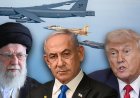
Iran's newly appointed supreme leader Mojtaba Khamenei delivered his first public statement vowing to continue military operations, while anti-war sentiment grows inside the United States.
 Sercan Roni
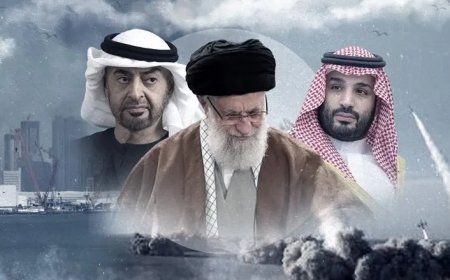
Iran's newly appointed supreme leader, Mojtaba Khamenei, delivered his first public statement since being elevated to the position following the assassination of his father, Ali Khamenei, on February 28. The statement, read out on Iranian state television, declared that military operations against Israel and US forces in the region would not stop until all American military bases in the Middle East are shut down.
The new leader did not appear on camera. US Defense Secretary Pete Hegseth claimed the leader is "wounded and likely disfigured," a characterization Iran has not publicly addressed. President Trump called it a "great honour" to have been responsible for eliminating Iran's previous leadership.
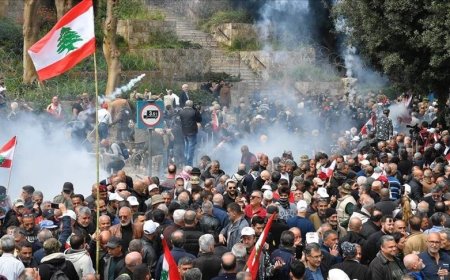
Inside Iran, President Masoud Pezeshkian and senior officials including security chief Ali Larijani and Foreign Minister Abbas Araghchi attended a pro-government rally in Tehran that was struck by explosions, killing at least one person. Iran blamed Israeli intelligence for the attack.
In Washington, the war is generating significant political pushback. More than 250 civil society organizations have signed a joint letter urging Congress to cut off funding for the military campaign, which has cost an estimated $11.3 billion in its first six days alone. Anti-war demonstrations were held outside the White House, while activists rallied at Times Square in New York City.
Australian authorities ordered all non-essential government personnel to leave the UAE and Israel, and urged Australian citizens across the Middle East to evacuate while it is still safe to do so. Qatar officially closed its airspace but launched over 140 special repatriation flights for citizens and residents stranded abroad.
Syrians meanwhile marked the 15th anniversary of the 2011 uprising that ultimately brought down Bashar al-Assad's government in late 2024, with celebrations taking on added significance amid the region's renewed turmoil.