Syria one year after Assad: Unity test looms for transitional government
As Assad's fall marks one year, Syria's new leadership faces Kurdish integration, minority rights, and legitimacy challenges.
 Sercan Roni
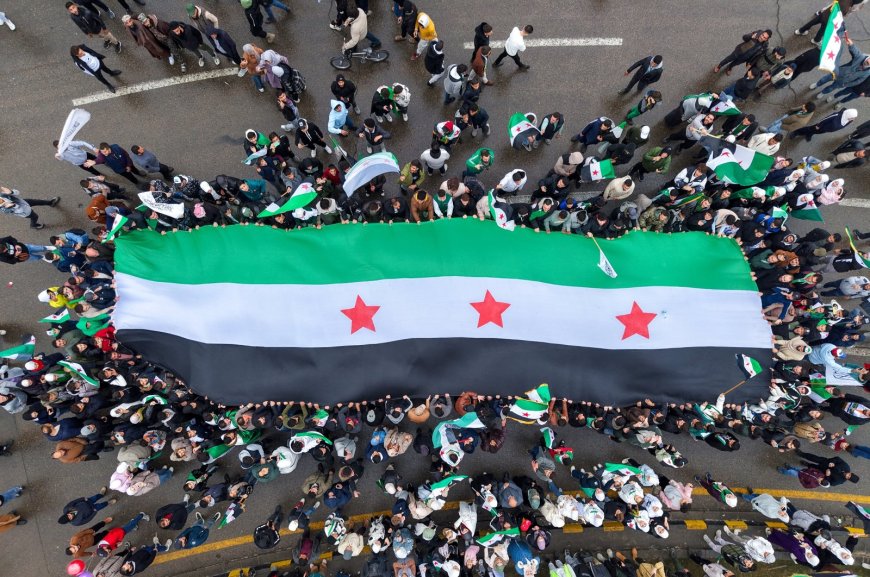
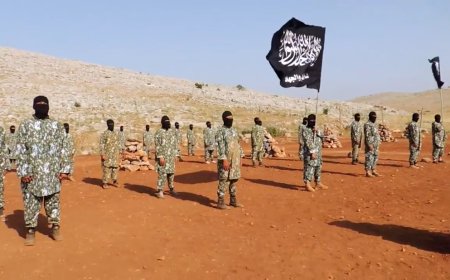
December 2025 marked one year since Bashar al-Assad, president of Syria from 2000, fled Damascus as a rebel offensive captured the capital, bringing Syria's 13-year civil war to an end. Yet as the country enters its second year without the Assad family's five-decade rule, the political transition remains deeply contested, and the path forward is fraught with challenges.\n\nAhmed al-Sharaa, leader of Hayat Tahrir al-Sham (HTS)—a group with origins in Al-Qaeda that has since been de-listed as a terrorist organization by the UN, US, and UK—was declared Syria's transitional president in January 2025. An interim constitutional declaration came into effect in March 2025, concentrating significant power in the presidency.\n\nHowever, as the UK House of Commons Library noted in a recent research briefing, the interim government does not have complete control over its own forces. This lack of control contributed to extensive violence in coastal areas in March 2025 in which Alawite minority communities were targeted. Meanwhile, Kurdish authorities have described the political transition as 'exclusionist,' and Druze areas in the south did not participate in the October 2025 selection of the interim parliament, with their 10 percent share of seats remaining vacant.\n\nThe Chatham House think tank has argued that the relative lack of power for the parliament, combined with the non-participation of Kurdish and Druze areas, risks undermining its legitimacy as it seeks to govern. Analysis by the Royal United Services Institute notes that how the Kurdish seats are filled will be key to Syria's future—warning that if they are not filled by leading figures from the Syrian northeast, it will result in the 'de-facto federalization of Syria.'\n\nCommentary by the Arab Centre Washington DC argues that while Syrians 'may not expect rapid democratization, they expect visible relief.' This makes issues of sanctions, sectarian violence, and humanitarian aid paramount for future stability. As the transitional government extends its control over Kurdish-held areas following a January 2026 agreement, the coming months will test whether Sharaa can balance military consolidation with genuine political inclusion—or whether Syria risks fragmenting along the very sectarian lines the revolution sought to overcome.