The Blueprint of Suppression: How the State Weaponized Anti-Terror Frameworks Against Turkey’s Entire Opposition
A critical analysis of how Turkey's widening political crackdowns, once limited to Kurdish factions, have expanded into a systemic threat facing all dissident movements.
 Sercan Roni
0
112
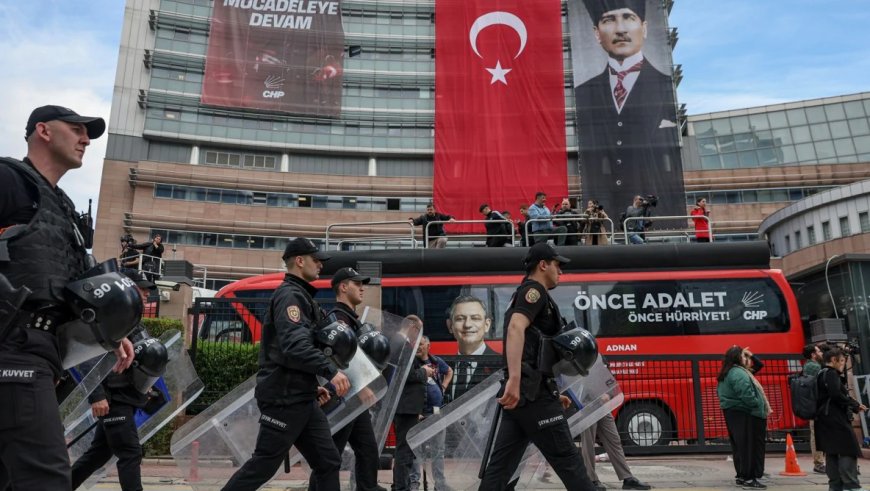
The accelerating wave of judicial investigations and potential detentions targeting mainstream secular and nationalist opposition leaders in Turkey marks a profound, yet entirely predictable, transformation in the country’s political landscape. For months, the expanding scope of anti-terror laws and administrative interventions has left virtually no dissident faction safe from state pressure. However, to view this sudden vulnerability of the mainstream opposition as a novel phenomenon is to ignore the historical trajectory of Turkish governance. Kurdish political analysts and civil society leaders have long emphasized that the precise legal and administrative mechanisms now threatening the broader opposition were systematically tested, refined, and normalized against the Kurdish political movement over the past decade.
At the core of this authoritarian expansion is the institutionalization of the state-appointed trustee system, or kayyum. What began years ago as a localized strategy to strip democratically elected pro-Kurdish mayors, particularly from the Peoples’ Equality and Democracy Party (DEM Party) and its predecessors, of their municipal mandates has now evolved into a standardized tool of central governance. Kurdish commentators note that when Kurdish municipalities were seized and their lawmakers imprisoned, the mainstream secular opposition frequently chose a path of passive compliance or outright silence, often out of a paralyzing fear of being labeled soft on national security threats by the ruling coalition. This fragmented response effectively granted the state the legal precedence and social impunity required to broaden its scope.
Ultimately, the current political reality demonstrates the high cost of selective solidarity within a divided opposition. By failing to recognize that the erosion of Kurdish political rights was merely the frontline of a broader campaign against democratic pluralism, the mainstream Turkish opposition inadvertently allowed the construction of the very judicial apparatus that now threatens its own survival. Kurdish analysts argue that true democratic resilience cannot be achieved through compartmentalized defense strategies. Until the secular, nationalist, and Kurdish factions establish a unified stance that rejects the weaponization of the judiciary against any group, the systemic risk of political detention will continue to hover over all forms of political dissent across Turkey.