Asian Refiners Face Billions in Losses as Middle East War Upends Hedging Strategies; Oil Jumps 3% on Fresh UAE Attacks
The Middle East conflict has triggered a historic disruption in global oil markets, with Asian refiners facing billions in losses as hedging strategies collapse amid surging Dubai benchmark prices. Iran's renewed drone attacks on UAE infrastructure—including the Shah gas field and Fujairah port—have pushed Brent crude above $103 per barrel, forcing the UAE to cut output by more than half. The Strait of Hormuz remains largely closed, blocking 20% of global oil trade, while the IEA considers additional emergency reserve releases. Goldman Sachs warns Gulf economies face their worst downturn since the 1990s if the conflict persists
 Sercan Roni

The widening Middle East conflict has triggered historic disruptions in global oil markets, with Asian refiners facing billions of dollars in losses as their hedging strategies collapse amid surging benchmark prices. Meanwhile, fresh Iranian drone attacks on UAE infrastructure have pushed Brent crude above $103 per barrel, forcing the UAE to cut its oil output by more than half .
Asian Refiners Suffer Historic Hedging Losses
South Korea, Japan, China, and India—which rely on the Middle East for more than 70% of their oil imports—are scrambling to secure alternative supplies as the Strait of Hormuz remains largely closed to commercial shipping. The crisis has upended the complex hedging strategies that Asian refiners use to protect themselves from price volatility .
According to a Bloomberg report published Tuesday, Asian refiners had bet on the Dubai crude benchmark remaining below $95 per barrel through March. With Dubai prices now surging past $102, these hedging positions are collapsing, forcing companies to book massive losses or post additional margin calls .
"The scale of the dislocation is unprecedented in modern oil markets," said Giovanni Staunovo, a commodity analyst at UBS Group AG. "Refiners who thought they were protected are discovering their hedges are worthless when they need them most" .
South Korea's SK Innovation, one of Asia's largest refiners, saw its shares drop 4.3% on Tuesday amid concerns about hedging losses. Japan's JX Nippon Oil & Energy and China's Sinopec are also reportedly facing significant margin calls as prices continue to climb .
The problem is compounded by the collapse of the usual price relationships between different crude benchmarks. Brent crude, the international benchmark, is trading at an unusually narrow premium to Dubai crude—a sign of extreme market dislocation that makes traditional hedging strategies ineffective .
Fresh Attacks on UAE Infrastructure
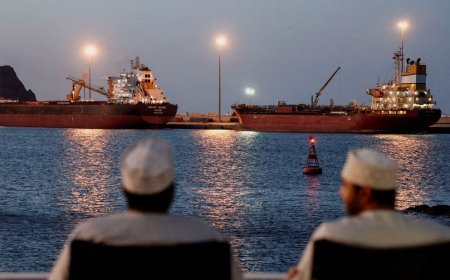
Oil prices extended their gains on Tuesday following reports of fresh Iranian drone attacks on UAE energy infrastructure. According to multiple sources, drones struck the Shah gas field in Abu Dhabi—a key facility operated by Abu Dhabi National Oil Company (ADNOC) in partnership with Oman's OOC—and targeted vessels near the Fujairah oil terminal .
The attacks forced ADNOC to implement further precautionary production cuts, with the UAE's total output now reduced by more than half since the conflict began. The UAE was producing approximately 3 million barrels per day before the war; current output is estimated at less than 1.4 million barrels per day .
Brent crude futures rose 3.1% to $103.77 per barrel in London trading, while West Texas Intermediate gained 2.8% to $99.41 per barrel. Both contracts have surged more than 40% since the US-Israeli strikes on Iran began on Feb. 28 .
"The attacks on the Shah field are significant because they target gas production, not just oil," said Vandana Hari, founder of Vanda Insights in Singapore. "This raises concerns about broader energy infrastructure vulnerability" .
Strait of Hormuz: Critical Chokepoint Remains Closed
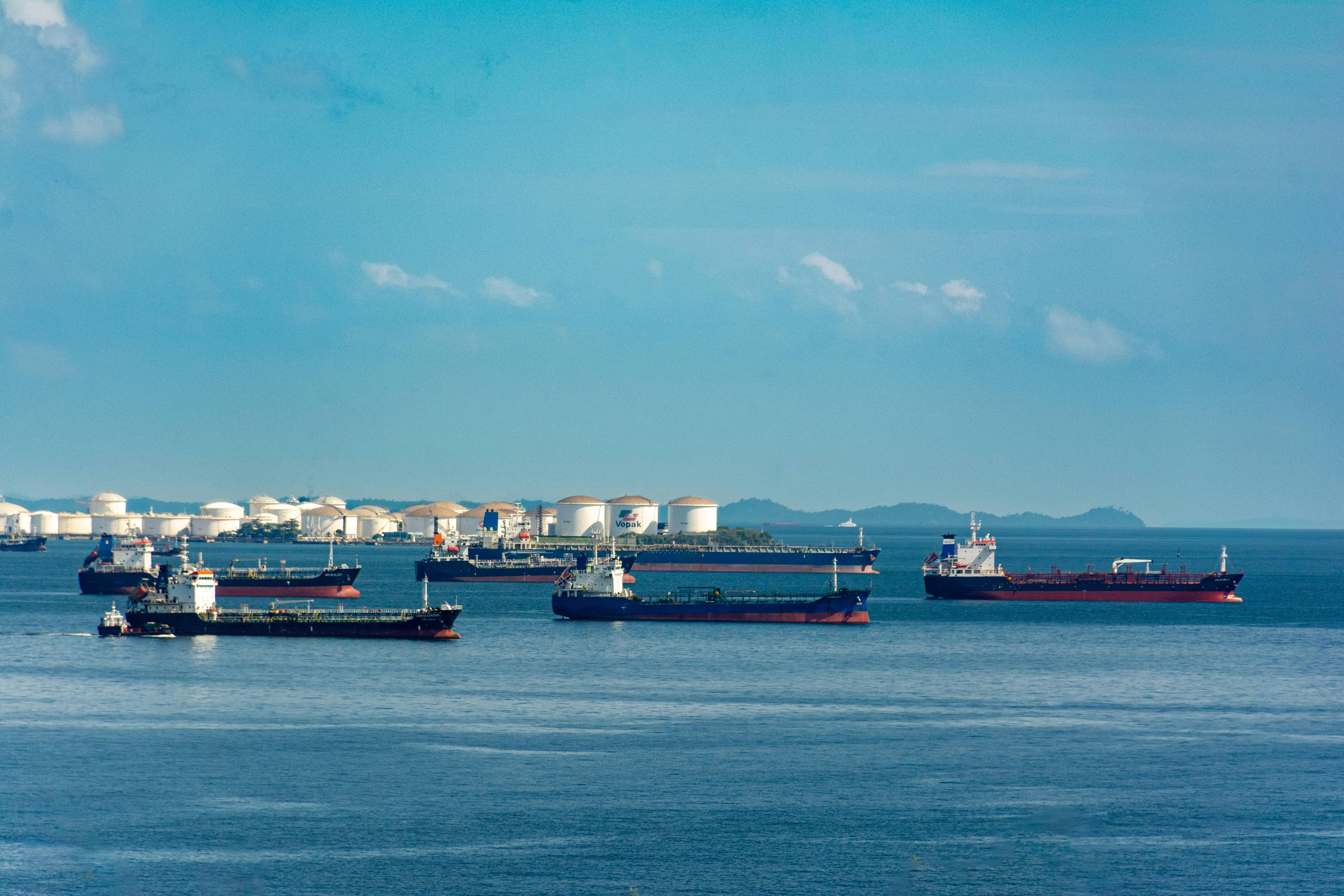
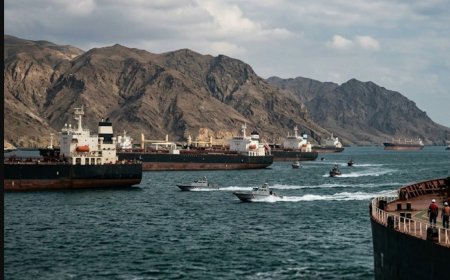
The Strait of Hormuz, through which approximately 20% of global oil consumption and 25% of LNG trade passes, remains effectively closed to commercial shipping. The backlog of vessels waiting to transit has grown to over 300 tankers, according to shipping data .
"For as long as this continues, it's a complete blockage of crude supply," said Saul Kavonic, an energy analyst at MST Marquee. "There are no alternative routes. The oil simply cannot get out" .
The closure has forced major producers across the Gulf to declare force majeure or implement precautionary shutdowns:
-
Qatar, the world's largest LNG exporter, has halted production and declared force majeure to buyers
-
Kuwait has cut crude production and refining as a precautionary measure
-
Iraq's oil production has dropped by nearly 60%, from 3.3 million to 1.3 million barrels per day
-
Saudi Arabia is redirecting shipments to Yanbu Port on the Red Sea, but capacity is limited
Goldman Sachs: 'Worst Downturn Since 1990s'
Goldman Sachs analysts warned Tuesday that Gulf economies face their most severe downturn since the 1990s Gulf War if the conflict persists through April. In a research note, the investment bank estimated that Qatar and Kuwait could see GDP contract by as much as 14% this year if the Strait of Hormuz remains closed for two months .
"For many Gulf economies, the war could have a bigger near-term impact than Covid," said Farouk Soussa, an economist at Goldman Sachs .
The UAE is still expected to record a budget surplus this year, but Qatar's fiscal deficit could widen significantly. Gulf states may increasingly rely on debt markets if the conflict continues to strain public finances .
IEA Weighs Additional Reserve Releases
The International Energy Agency (IEA), which last week authorized a record 400 million barrel release from member countries' strategic reserves, is considering additional measures if disruptions persist .
Japan announced Tuesday it would begin releasing its 80 million barrel contribution this week, with the first shipments expected to reach Asian refiners within days. The United States is contributing 172 million barrels from its Strategic Petroleum Reserve .
However, analysts warn that even these historic releases may not be enough to offset the scale of the disruption. "Four hundred million barrels sounds like a lot, but global oil demand is about 100 million barrels per day," said Staunovo. "If the Strait remains closed for months, these reserves will be depleted quickly" .
Inflation Fears Resurface
The sustained energy shock is reigniting inflation fears worldwide, particularly in Asia where economies are heavily dependent on Middle Eastern energy imports .
South Korea's finance ministry announced emergency measures to stabilize fuel prices, including temporary tax cuts and subsidies for low-income households. India, which imports more than 80% of its oil, is facing renewed pressure on its current account deficit and currency .
According to projections by Oxford Economics, the current energy shock could push inflation in Asian economies 1.5 to 2 percentage points higher than previously expected, complicating central bank policy decisions .
Market Outlook
With no ceasefire in sight and both sides showing little sign of de-escalation, analysts expect oil prices to remain elevated and volatility to continue .
"The market is now pricing in a prolonged disruption," said Hari. "Every new attack, every fresh escalation pushes prices higher and makes the economic fallout worse" .
For Asian refiners, the immediate challenge is survival—managing margin calls, securing alternative supplies, and hoping their hedging losses don't spiral into solvency crises. For Gulf states, the longer-term question is how to rebuild an energy sector that has become a target rather than a source of security .