Why military strikes won’t erase Iran’s nuclear program
IAEA chief Grossi warns that despite heavy damage, Iran’s nuclear knowledge and material will survive the current war.
 Sercan Roni
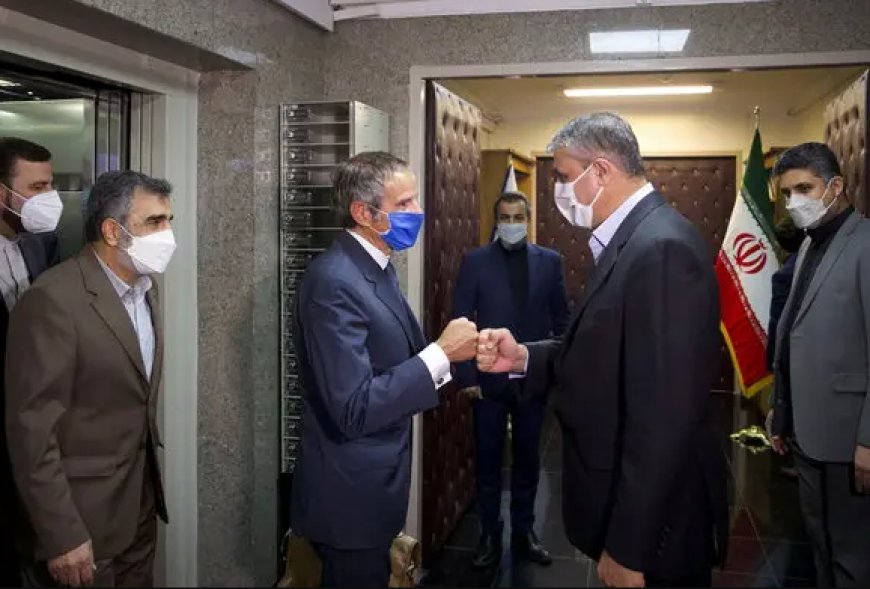
As US and Israeli warplanes continue to pound Iranian facilities, a sobering reality is setting in among intelligence and non-proliferation experts: You cannot bomb knowledge. Despite the Trump administration’s stated goal of neutralizing Iran’s nuclear threat, the head of the United Nations nuclear watchdog believes a significant part of the program will survive the conflict.
Rafael Mariano Grossi, Director-General of the International Atomic Energy Agency (IAEA), stated unequivocally on Wednesday that he does not believe the war can entirely eliminate Iran’s nuclear program. “Of course, there is an enormous degradation of the physical facilities,” Grossi told NPR. “But most probably, at the end of this [military conflict], the material will still be there and the enrichment capacities will be there, perhaps some infrastructure will still be there” .
This assessment challenges the core justification for the military escalation promoted by Israeli Prime Minister Benjamin Netanyahu and supported by the US administration. While the strikes have reportedly “knocked down” the most advanced parts of the program, Grossi notes that Iran is a “very big country” with a sophisticated scientific base scattered across universities, facilities, and private labs.
The IAEA chief confirmed that a drone strike hit the Bushehr nuclear power plant, though the damage was “not very significant” and the reactors were unaffected. However, the agency remains blind to the status of an underground enrichment facility in Isfahan, as inspectors were evacuated after Israel launched attacks on June 13, 2025 .
Ultimately, Grossi’s intervention serves as a warning against the illusion of a purely military solution. By leaving the scientific cadre and a dispersed infrastructure intact, the current strategy risks creating a “North Korea scenario”—where a nuclear threshold state emerges from the rubble with even less incentive to negotiate, having witnessed the cost of abandoning its deterrent. For long-term regional security, diplomacy remains the only viable off-ramp.